Do you want to promote your business on the Internet?

Improve your sales, get more clients. Click on the link below:

http://pinoybusinessbooster.blogspot.com/

Donut Empire

Posted by Francis Isberto | Labels: | Posted On Thursday, December 17, 2009 at 9:14 PM


Just look at this picture. I bet you want to get a piece of it. The image above has flavors that consist of Typhoon Oreo, Almond Pit, and Choz O'Latte. This are just a few of the mouth watering donuts. So where can you find this kind of donuts?

You might be thinking that they came from Dunkin Donuts, Mr. Donuts, or even Go Nuts Donuts. I'm sorry to disappoint you but they don't have that kind.
Alright they came from Krispy Kreme. Close but no cigar. They don't have that too. In fact this donuts are not yet available in the Philippines. They can be found in Singapore.

Introducing Donut Empire. The largest donut chain in Singapore. Donut Empire currently has 13 outlets in Singapore, 2 in Malaysia and is opening outlets in Dubai, Indonesia, India, Brunei and China.
In the year 2007, Sky and Steven Chiew (founders of Donut Empire) drew up a plan to put up a donut chain based on their passion for food. Their first outlet was set in Tanjong Katong Road. Their business grew up from there and was widely known through out South East Asia.

So what are the donuts menu. Here is a one sample picture:
  • D Haven - consist of real fresh quality Durians mixed with egg-free custard

plus you got a mango glazed donut, tiramisu donut, cappuccino donut, green tea donut from Japan, and liguid cheese donut from Australia. This are just to name a few.
For more donuts menu information log on to : http://www.donutempire.com.sg/

Donut Empire is so unique that they even have a mobile outlet where they put all there donuts in a mobile truck or van and open it up in an congested area. In that way it can save rental cost and they can reach areas like schools, parks, beach, villages, etc.

Be the first Filipino to get a franchise outlet (yes, they do franchise). Be the first one to set it up in the Philippines.
For more information about franchising, you may email their Business Development Manager at franchise@donutempire.com or call 6742 2322 (Singapore).

Here are some more websites about Donut Empire:

http://donutempireblog.blogspot.com/

http://donut888.blogspot.com/


My advise to you.... Grab this opportunity or someone else will.

Burong Bangus

Posted by Francis Isberto | Labels: | Posted On Wednesday, December 16, 2009 at 7:30 PM


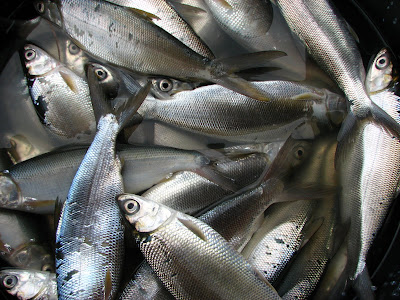
Bangus (Milkfish) is one of the most popular fish and seafood in the Philippines. And there are different ways of cooking them like fried bangus, sizzling bangus, bangus belly steak, nilagang bangus, rellenong bangus, smoked bangus, lumpiang bangus, paksiw na bangus, bangus sa tausi, bangus bistik, afritadang bangus, and bangus kare-kare.

All of these bangus recipes will be an additional menus on your restaurant or canteen. You can't simply go wrong with bangus. Even if bangus is much "bonier" than other fish, it's the taste is what people are after.

Bangus is popular in the province of Pangasinan, a province devoted to aquaculture. So if you want to get good bangus source go to Pangasinan.

I have one more bangus dish to share with you. It's Burong bangus.

Materials Needed:

1 kilo bangus
75.2 grams salt
17 grams angkak (red yeast rice)
5 cups rice

Here are simple steps to process “burong bangus” for business:

1. Remove the scales of the skin
2. Debone the bangus.
3. Cut the fish into butterfly fillets. Cut into serving pieces.
4. Add 75.2 grams of salt and allow to saturate for one hour.
5. Cook five cups of rice by boiling in water. Cool.
6. Add the 17 grams angkak to cooked rice.
7. Mix 400 grams salted fish and 850 grams cooked rice. Pack rice and fish alternatively in sterilized glass jar.
8. Place the remaining rice on the upper layer of fish. Cover with plastic film. Place the remaining rice on the upper layer of fish. Cover with plastic film.
9. Ferment for seven days at room temperature.
10. Saute in cooking oil, garlic and onions before serving.


There you go. Hope this recipe will add sales to your restaurant.


Plumbing Services

Posted by Francis Isberto | Labels: | Posted On Monday, December 14, 2009 at 6:40 AM


Plumbing services. It's a dirty job but somebody has to do it. That somebody can be you. It may not be your typical work or business but if you get many customers/clients money will sure come in.
For those who have no idea what plumbing is it's a skilled trade of working with pipes, tubing and plumbing fixtures for drinking water systems and the drainage of waste. The plumbing industry is a basic and substantial part of every developed economy due to the need for clean water, and proper collection and transport of wastes.

An uncle of mine has that kind of business and caters to big restaurants like Pancake House, Shakey's, Red Ribbon, Dencio's, Wendy's, and Hua Lan Cuisine. In Wendy's alone they service the commissary plus the 40 branches. Plumbing business could be a money making machine if you maintain big restaurants.

So how do you service this restaurants? There are many different ways. One is giving a monthly preventive maintenance. This is to prevent any leaks and waste clogging in the kitchen. They also check if there are pipes that are needed to be replace. And they suck all the waste in the sewage. Last time I check they charge a monthly fee of Php 3,500 per outlet and branch.

So if you do the math if Wendy's has 40 outlets multiplied by Php 3,500 that equals to Php 140,000 a month. And that's only one restaurant, if you got 10 big food chains with 40 outlets... you could have a gross income of Php 1.4 million a month.

Other services given to restaurants are declogging of toilet bowls, sanitary line installation, line repiping, cleaning of over head tank, etc. Each services has its own cost.

Restaurants are not only the target market. you could go to schools, hospitals, hotels, resorts, villages, etc. Any area that's needs plumbing service is reachable. Just learn to have your own niche where your plumbing business will be known.
My uncle concentrated on big food chains and now he handles majority of the big restaurants not only in Metro Manila but in the rural areas as well.

To start you should hire good plumbers. One that you can trust with. Pay them generously. Your plumbers is the heart of your business.
Next get all the equipments needed. You will need drain cleaning machines, pipe threading tools, basic masonry and carpentry tools, and a vehicle. A close van will do or an AUV.

Your next goal is to get permits and licenses from the DTI, BIR, Mayor's permit, etc. Once you established all that you can now start doing your marketing. Advertise your business through newspaper, billboards, flyers, and the internet. If you need help promoting your business through the internet you can log to www.pinoybusinessbooster.blogspot.com/

If your target is schools in the metro, go to each and every schools and set a meeting with the school administrator. Prepare your business proposal and letter of request. Start with one school then move on to the next one once you've mastered it. Your business will be a well oiled machine once you reached 10 big schools.

Are you ready to be a plumber? It is not as elegant as other business but it still brings home the bacon.

Growing Orchids for Profit

Posted by Francis Isberto | Labels: | Posted On Friday, December 11, 2009 at 7:25 PM


You can earn money by growing orchids out of your backyard. If you have a passion for plants and flowers this could be your thing. But before you start you need to do a research and study the background of orchids growing.

WHAT ARE ORCHIDS:

Orchids or Orchidaceae is the largest family of the flowering plants. It's popularity ranks among the top including roses.

Orchids are grouped according to two basic growth habits, namely: monopodials and sympodials. Monopodials are orchids with one main stem with grow taller every year. The stem lengthens, adding new leaves to the top and aerial roots occasionally form along main stem. Flowers are always borne laterally (between leaves) and successively from older nodes towards young nodes. Monopodials include Phalaenopsis, Arachnis, Vanilla, Aerides, Vandopsis, Vanda, Phyncostylis, Ascocentrum and Trichoglottis.

Sympodials are orchids with creeping ground stem or rhizome which sends out shoot which eventually develops into stem and leaves. This new growth produces its own roots and leaves at maturity. Flowers are formed at the terminals or at the sides of the stem. After flowering, another shoot is formed at the base of the proceeding growth to repeat the cycle. The stem is sometimes thickened and fleshy, forming pseudobulbs. Cattleya, Dendrobium, Oncidium, Coelogyne, Bulbophyllum, are examples of orchid general with sympodial growth habit.

Flower
Despite the complexity of the variety of orchid flowers, the structure is like any monocot flower. There are three similar sepals and petals but one of the petals is highly modified into an attractive structure known as labellum or lip. The lip attracts pollinators and serves as landing platform for pollinating insects. In the center of the flower is an organ called gynostagium, gynandium, or column. On the inner side of the column is the stigma, a shallow depression which produces a sticky solution where pollinia are deposited.

Orchid Plants
Unlike seeds of other flowering plants, orchid seeds are so minute consisting of an embryo with little or no stored food. Orchid seeds are produced literally by the thousands or even millions (Cattleya labiata) but only a few develop into mature plants.

Life of orchid seed is very critical during early stages of germination. Unless a symbiotic relationship with a beneficial fungus is established, orchid seed will die. The fungal aid or mycorrhiza is a mass of fungus hyphae, usually of species Rhizoctonia. During germination, mycorrhiza infects the basal end of the seed and releases an enzyme which converts starch, an energy of germination and enhances further its development. Orchids are limited to the environment with suitable fungus, where sugar and amino-nitrogen compounds are readily available for seed germination.

Genera/Species/Hybrids
The family Orchidacease consists of about 20,000 to 35,000 species distributed into 800 genera. This constitutes roughly 10% of all flowering plants in the plant kingdom. There are many hybrids and cultivated forms which continue to increase at an average rate of more than 1,000 per year. Many endemic species are found in the Philippines, which have gained worldwide recognition by orchidists. There are about 130 genera and 941 species, of which 25 genera and 140 species based on consecutive estimates are of commercial value.

Dendrobium
The genus Dendrobium contains a very large number of heterogenous species. It has erect, cane-type pseudobulb and bears flowers with relatively long vase-like. This group is naturally distributed in warm and humid areas, thus resulting hybrids require warm and humid environment with abundant sunlight for optimum growth and development.

Hybrids
• In the Philippines, the following Dendrobium hybrids appear promising for cutflower production: Purple:
• Den. Tomie, Jacquelyn Concert, Den. Norman Jackson, Den. Vera Patterson x Den. Betty Hecht; Off-White-
• Den. Jacquelyn Thomas; Yellow: Den. May Neal Crosses, Mary Mac, Bethy Ho; White: Den Water Oumme,
• Den. Neo Hawaii, Den. Jack Hawaii, Den. Multico White, Den. Jacqueline Thomas x Den. Alice Spalding,
• Den. Singapore White.

Vanda
This group is generally sun-loving and robust with colorful, beautifully-shaped flowers, heavy substance and long-lasting.
Vandas are divided into three:
1. Strap-leaf Vandas – These are epiphytes with flat, channeled leaves.
2. Terete Vanda – Mostly terrestial plants with cylindrical, pencil-like leaves. Most commerciallyimportant hybrid is V. Miss Joaquin.
3. Semi-terete Vanda – highly floriferous, making them desirable for cutflower. These are derived from crossing terete hybrid with strap leaf species/hybrid.

Cattleya and its Allies
Modern Cattleyas consists of a complex group of hybrids created by combining cattleya species or hybridization with closely allied genera such as Laelia, Brassavola, Broughtonia. Known as “Cattleya Alliance”, these are natives in Brazil, Columbia, Central America and Mexico. Genus Cattleya is a very interesting diversified group of orchids with broad spectrum of colors and types.

Some of the more famous hybrids are:
1. Purple Cattleyas, like Lc. Bonanza, Blc. Norman’s Bay, Bc. Culminant;
2. White Cattleyas, like C. Bow Bells, C. Bob Betts, C. General Patton, and C. General Japhet;
3. Semi-Alba Cattleyas – also caled white with colored lip. Hybrids derived from C. Mossiae and C. Warscewiczis which are white with purple lips;
4. Yellow Cattleyas – Blc. Malworth, Blc. Jane Helton, Blc. Malvern and Lc. Lorraine Shirai;
5. Red Cattleyas – Slc. Falcon “Alwanderi”, Slc. Jewel Box, Lc. Desert Orange and Lc. Rojo.

Phalaenopsis
The graceful bearing of the Phalaenopsis, whether native species or advanced hybrids is quite pleasing to the eye. The long, slender flower stalk bears the flower high and the arcs away from the leaves appearing fragile yet regal.
The following hybrids are promising for cutflower production:
1. Large White – Phal Anne Cavaco, P. Grace Palm, P. Dos Pueblos and P. Quisumbing; 1.
2. White with Red Lip – Phal. Eva Lou, P. Queen Emma and P. Ruby lips; and
3. White Stripes – Phal. Percy Porter

Growth Requirements
Basically, the growth requirements of any plants are temperature, water, light, aeration and nutrition. These are the environmental factors which a good grower should try to stimulate for each type of orchids.

Temperature – cool-growing orchids prefer night temperature of 10 deg. C to 18.3 deg. C and 15.6 deg. C to 21 deg. C day temperature, like Cymbidiums, Odontoglossums and some Phaphiopedilums.

For the intermediate group like Cattleyas, some Dendrobiums and Oncidiums, night temperature needed is 12.8 deg. C to 15 deg. C and day temperature ranges from 18.3 deg. C to 21 deg. C.

Most orchids grown in the Philippines are warm-growing where night temperature is below 18.3 deg. C and day temperature rising to 21 deg. C to 32 deg. C. These temperatures are ideal for growing Renanthera, Vandas, Phalaenopsis, Aerides, Trichoglottis and Dendrobiums.

Light – sun-loving orchids are Arachnis, Renanthera, Arandas, and terete and semi-terete Vandas.

Partial shade orchids need lower light intensity for healthy growth. Example: Dendrobium, Phalaenopsis, Cattleyas, and strap leaf Vandas.
Orchid plants which receive enough light have short plump stems with yellowish-green leather leaves. Those receiving too much sunlight are yellowish, stunted and even scorched. Those under too much shade become green, soft and succulent with thin spindly stems.

Water – generally, orchids prefer an atmosphere where relative humidity ranges from 50% to 85%. A constantly saturated atmosphere (100% relative humidity) is just as harmful as constantly dry environment. High humidity and relatively low night temperature are conducive to the development of many diseases and pathogens especially soft rot. Growers often water the plants early in the morning so that before nightfall, the leaves are already dry. During sunny days, it may be necessary to increase humidity of the atmosphere by misting or wetting orchid house floor to enhance vaporization.

The need and frequency of watering depend on interacting factors, such as size of containers, potting media, temperature, light intensity and air movement. Orchids in large containers dry out more slowly than those in smaller pots. Plants in baskets, twigs and slabs require more water than those in pots. During drier months, more frequent watering is required. Plants suffering from lack of water become flaccid and stems and pseudobulbs become shrivelled.

Aeration – orchids must have free circulating air around them. Orchids are found where there is constant breeze. Stagnant air does not allow drying of potting medium and foliage.

Nutrition – apply fertilizer either through liquid or dry method. By liquid feeding, dissolve water soluble salts and apply resulting dilute solution to plant. The amount and kind of fertilizer required by orchids depend upon growing conditions, potting media, species and stage of development.

Young seedlings are usually given dilute solution of nitrogenous fertilizers or complete fertilizers with higher nitrogen content plus phosphorous and potassium (4-1-1 or 2-1-1). Pig manures, chicken or fish emulsion may be prepared and applied once a week or once a month. As plant gets older, increase phosphorous and potassium level correspondingly.

Generally, under conditions of more frequent rainfall, practice more frequent fertilization as leaching is higher. When plants are dormant or inactive, do not fertilize plants. Plants exposed to higher light intensities also require higher fertilizer or nutrients than those grown under heavier shade.

Potting and Repotting – potting of orchids varies according to genera or species.
For Cattleyas, some growers use clay pots with charcoal as potting medium. Remember not to over pot them as medium remains wet for a long time in big pots. Place the bulb close to rim of pot with the lead towards center. An old Cattleya needs repotting when the plant has overgrown its pot and when potting materials has deteriorated.

For Vandas and Ascocendas, small seedlings are potted with little osmunda fiber and a little charcoal. For older plants, coarse tree fern or charcoal maybe used for potting. Another method is by mounting them in twigs on driftwoods or by hanging them in wooden baskets.

For Dendrobium, pot them in clay pots or mount them on driftwoods. For large-scale production, clay pots with charcoal are ideal.

For Phalaenopsis, mount them in acacia or kakawati wood cuttings, or fern slabs. Or mount them in pots with charcoal and little osmunda fiber.

In potting, the general rule to remember is to allow quick and complete drainage of the potting medium.

Some types of orchids are planted directly in well-drained bed or in soil pots.
Propagation

There are two groups of propagating orchids; asexual (vegetative propagation) and sexual (seed and embryo culture).

Asexual or Vegetative Propagation
Vegetative propagation can be done in any of the following methods:
• Division – Cattleya, Dendrobium, Paphiopedilum and Cymbidium can be multiplied through division. Separate three to four canes or bulbs from mother plant to form new plants by cutting through rhizome and pot them individually.
• Formulation of Keikis and offshots – occasionally, a bud will give rise to a young plant at the top, side of pseudobulbs, canes or at the nodes of flowering stem. The Hawaiians call these young plantlets from vegetative or flowering stem ‘keikis’. Filipinos call them ‘anak’. Once the young new roots develop, remove plantlets and pot separately.
• Top cutting – monopodial orchids, such as Vandas, Ascocendas, Arachnis, Renanthera, Trichoglottis, and even Phalaenopsis and Doritis, are best propagated by top cutting. When plant becomes leggy, cut off top part, retain few roots and pot it separately. New roots develop readily by top cutting.
• Tissue Culture – Tissue culture is one of the most rapid methods of multiplying vegetative plant. It develops new plants in an artificial medium under aseptic conditions from very small parts of plants, such as shoots tip, root tip, pollen grain. Thousands or even millions of identical plants can be produced from a small tissue in a relatively short time.

Sexual Propagation or Seed Embryo Culture
Orchid sexual propagation is done through seed embryo culture. Orchid seed is so minute, devoid of stored food for seed germination. However, during germination, fungi infect orchid seeds and help convert complex starch to simple sugars, which serve as energy source. That fungi and orchids have symbiotic relationship during germination.

Under artificial or laboratory conditions, a sterile artificial medium with sugar and other nutrients is required. Through research, an excellent medium for growing seeds without fungi was developed. Inside the bottle where orchid seedling is grown is a miniature glasshouse which protect seedlings from unfavorable environmental conditions. Using artificial media has insured the growing of nearly all orchid seeds into mature plants.

1. Flasking and reflasking or protocorms – when orchid seed or embryo is planted in a culture bottle, numerous seedlings germinate in a very limited space with little available food. The first sign of successful germination is when orchid seed starts to swell and turns green. As growth continues, the embryo becomes bigger and assumes a flattened top shape called protocorm. A small amount of seed sown produce hundreds of tiny photocorms growing in limited space. At this stage, transplant them into fresh medium and table for further development and rapid growth.

2. Composting and Repotting Seedlings – Orchid seedlings are ready to be transplanted from culture bottles when roots and leaves are fully developed. Dendrobiums may be potted after 4 to 6 months. Vandas, Phalaenopsis and Cattleyas in 6 to 8 months after reflasking before seedlings are ready for community pots. Seedlings should be potted only in sterile potting medium and pots to avoid damping-off.

Potting medium may consists of sterilized fine Osmunda fibers, charcoal, chopped tree fern (paslak).

After removing seedlings from bottles, wash out all agar from seedlings and wash them in fungicide suspension. Drain excess moisture and sort out seedlings according to size. Small seedlings are planted in community pots, while the bigger ones are potted individually in small pots.

Flowering
Like most plants, orchids must attain a certain degree of vegetative growth before they are capable of flowering. This is referred to as the stage of ripeness to flower.

For Phalaenopsis, the minimum number of leaves is 3 before they will flower, 8 in Vandas, and 14 in Aranda. Vegetative growth of seedlings can be accelerated to attain the stage of ripeness to flower. Optimum growing conditions such as high temperature, humidity, adequate and continuous light, frequent application of dilute fertlizer have shown hastening of flowering in Vanda and Phalaenopsis.

Factor affecting flower bud initiation
Photoperiodism – is the development of plants as conditioned by the length or duration of light. There are 3 orchid categories based on their response to photoperiod: 1) short-day; 2) day-neutral; and 3) long-day groups.
Temperature – for some orchids, low temperature is required to induce flowering. Temperature interacts with photoperiod as regards to flower induction. Some orchids required low temperature to induce flowering, as follows: Cymbidium, Cattleya Mossiae; Dendrobium, Phaphiopedium, Phalaenopsis, Schilleriana.

Harvesting
Orchids flowers do not mature until 3 to 4 days after they open. It is important to know how old the blooms are before harvesting. Flowers cut before they mature will not hold up nor last as longer as the matured flowers. Spray-type orchid present no problem. Each floret opens 1½ to 2 days apart. If 3 or more flowers are open on the spike, the lower flower is mature and can be separated.

You will be surprised that more men are more engaged in orchid growing than women. This is just to show that orchid has tap every market available.

Running a Taxi Fleet

Posted by Francis Isberto | Labels: | Posted On Tuesday, December 8, 2009 at 6:38 AM


What is a Taxi? A Taxi or a Taxicab is a type of vehicle for hire with a driver. A taxicab conveys passengers between locations of their choice. In New York, you will see a yellow taxicabs piled in one line stuck in a traffic jam. In Mexico, you will notice the "Vochos" (green Volkswagen taxi beetles).
In Hong Kong, the red taxicabs is the most familiar one. And in the Philippines, where the most common is the white sedan.

So how do you operate a Taxi or a Taxi Fleet? First off is you should choose which the type of car will you use. Normally the top Japanese car models are the best (Toyota, Mitsubishi, Nissan). Their resale value is better than other Korean car models and passengers would prefer riding in a Japanese car model for no reason at all.
Toyota has the best economical spare parts and the availability is almost everywhere. So I suggest get a Toyota Vios. It is not that expensive, it's fuel efficient (1.3 L), and has good leg room and ample space.

Getting a brand new car for a taxi is much better than buying a 2nd hand taxicab. It will cost you big at first but will save you money in the long run because 2nd hand cars will require more maintenance and gas consumptions is way of the chart. I advised you get a 2-3 year old car and convert it to a taxicab. This will save you around Php 100,000 - 200,000. That amount can be used for getting a franchise.

Next is the permits and licenses. Get a taxi franchise from LTFRB (Land Transportation and Franchising Regulatory Board)

Then the most important part.... looking for a driver. This is the most common problem of a taxi operator. There are only a few taxi drivers that are trust worthy and reliable. I suggest you hire somebody that you know. A distant relative in your province who needs a steady job or maybe the husband of your child's yaya. Give your driver a good share so that he will stay longer and he will treat your vehicle with proper care.

Taxi is a lucrative business if your drivers are well experience in driving cabs and knows the in and outs of metro manila. Normally the boundary is Php 1,300 a day. That is what the owner gets. The rest of the gross income will go to the driver. Gasoline expense is generally covered by your driver. So minus the number-coding scheme, your taxi cab will be on the streets for 6 days in a week which can accumulate up to Php 7,800 a week or Php 31,200 a month.
That is gross income. You still have to pay taxes and leave allowance for maintenance like tires and batteries.

Here are some tips to save your taxi business money by lowering the operating cost:

1.) Get a trusted mechanic and electrician to fix all mechanical and electrical repairs. Remember that your taxicab runs almost 24/7 and will wear out for the everyday use. You need to take care of your car. You will lose money if your taxicab is not running. You need your taxicab to be in good running condition to reach your target income.

2.) Get a smaller engine car (1.3 L) or install an LPG on your taxicab to save on gasoline expense. This will help your taxi driver to reach the boundary faster and will take care of your vehicle better.

3.) Start first with one unit. Get the feel of it. Know all the problems them expand by acquiring more units. It's not practical to only have one. What if your only one unit was smashed by a truck. Your taxi business will die immediately. You need a few more units to cover the expense of the smashed taxicab. 20-30 taxicab units will be feasible.

4.) Get a good and reliable source of tires, batteries, spare parts for your units. Befriend with your source and get a good price. Buy in volume if you have to.

5.) Give incentives and bonus to your drivers. Remember that your drivers not your vehicles runs the show. Discontented drivers will just leave your vehicle out of nowhere giving you all the problems. Take good care of your drivers. Your income will be steady if you keep your drivers happy.

But the most important of all, be "hands-on". Just like in every business you should be on top of things. You presence and dedication to the taxi business will give you success.

Chocolate Chip Cookies

Posted by Francis Isberto | Labels: | Posted On Thursday, December 3, 2009 at 7:03 PM


What's the one word that comes to your mouth? Yummy! Yeah, That's what I thought. Chocolate Chip Cookies are easy to make and a favorite of both children and adults alike. Chocolate Chip Cookies are one of the most convenient treats to take to potlucks, family holidays, and to give as gifts. They do not need to be refrigerated and are easy to carry.

How about making your own brand of Chocolate Chip Cookies. With good packaging and marketing, this small business venture could turn to a mega type of business. Just be innovative and search on how to improve the quality of your product.

For starters, here is one home made recipe:

INGREDIENTS:

1 Cup Crisco (Vegetable Fat)
1/2 Cup Butter
1 1/4 Cup White Sugar
1 1/4 Cup Brown Sugar
1 Tablespoon Vanilla
2 eggs
4 Cups Flour
2 teaspoons Baking Soda
1 teaspoon Salt
2 Cups Semisweet Chocolate Chips

EQUIPMENT:

Mixer (a hand mixer will do fine, but we use a Kitchen Aid)
measuring spoons
3 cookie trays
spatula
measuring cups
cooling racks

1st PROCEDURE:

Beat together the following ingredients until sugars are blended well and mixture's consistency is light and fluffy. This is the secret to a mouth watering chocolate chip cookie.

1 Cup Crisco

1/2 Cup Butter

1 1/4 Cup Brown Sugar

1 1/4 Cup White Sugar

Half way through this step you will want to scrape the sides of the bowl. This will prevent any granules of sugar from not being mixed in.

2nd PROCEDURE:

Add the Eggs. Now once you are finished mixing these first ingredients and your mixture looks fluffy add the eggs and vanilla. Mix these in until well blended.

3rd PROCEDURE:

Mixing Dry Ingredients.

Combine in separate bowl:

4 Cups Flour

2 teaspoons Baking Soda

1 teaspoon Salt

Now mix this together very well.

Now slowly add the dry ingredients to your fluffy concoction in the mixer while mixing on low speed (you can do this too manually).

Once you have mixed your dry ingredients in your cookie dough it should look like a moist texture.

4th PROCEDURE:

Adding the Goodies.

Now it is time to add in:

2 Cups Semisweet Chocolate Chips

*If you are not using a Kitchen Aid mixer hand stir these goodies in.

Hint: Freezing your Chocolate Chips before mixing them into the dough will prevent them from smashing and turning your cookie dough brown.


5th PROCEDURE:

Shaping the Chocolate Chip Cookies. When shaping your cookies it helps to use a ice-cream scooper.

We suggest that you place a sheet of baking parchment on the pan, and putting the cookie dough on top of the parchment paper.

If you don't have parchment paper, just place the cookie dough directly on the baking pan. Do not grease the baking pan.


6th PROCEDURE:

You will want to bake your cookies for 13-15 minutes on an ungreased cookie sheet at 350 degrees.

After about 5 minutes of cooling on the cookie sheet remove them and place them on a cooling rack until they are no longer warm. Refrigerate if you prefer.


So there, you know have your own Chocolate Chip Cookies. Start selling to your friends and relatives and let the word of mouth do the marketing. Enjoy!

Christmas Caroling

Posted by Francis Isberto | Labels: | Posted On Tuesday, December 1, 2009 at 1:33 AM


It's Christmas time once again. You could feel the cool breeze. Christmas lights and decors are everywhere. And as you look to your Christmas Gift List you noticed that the number has doubled. You begin to ask yourself how am I going to buy all these gifts. There's a way my friend. Make profit by doing Christmas Caroling.

But I don't know how to sing? Or I am not a songbird like Regine Velasquez. That's alright, you don't really need to sing. What you could do is gather enough kids who are in the age bracket of 4-9 years old. The more that you can gather the better. It doesn't even matter if their good in singing. People find kids adorable and they are looking more for their appearance like costumes than their voice (although it wouldn't hurt if you got a singing group).

Plus their voice, even if it is not yet at it's peak, is music to every adult ears. They are like small birds standing in a tree branch gathered all together. Ever heard the sound of a children choir inside the church. They are so good that you don't need a musical instrument to make it worth while.

Okay so how will you do it. Look at your immediate family first then go further to long distant relative, friends, neighbors, and the community. You can start with your kids or your younger brothers and sisters. You can contact your niece and nephews as well. Tell them to call their friends and ask them if they want to join. A group of 20 kids would be nice but you can start with just 10.

If you don't know how to play any musical instrument then you can search for somebody who knows. Usually a guitar will do but you will be better if your equip with a pipe organ, flute, clarinet, saxophone, bass trombone, harmonica, harp, ukulele, violin, snare drum, and maracas. If your able to manage that then you have yourself a mini-symphony orchestra.
Plus if you got kids that have soprano, alto, and tenor voices then you got yourself a money making machine.

Start with your village and community first. Send them letters with your contact numbers on it. Let the homeowners set the time and date (usually they are free on week-ends). A normal charge for one house visit in a exclusive subdivision is usually Php 500. But if you have a good singing group, you can charge higher ranging from Php 1,000 - Php 5,000.
Let's just assume that you charge Php 500. If a certain village has 4,000 residential units and you just got 25% of the total population. Php 500 multiplied by 1,000 is Php 500,000. If you have 20 kids plus 3 musicians plus yourself (that's a total of 24). Then you divide the total amount of Php 500,000. Each individual will get a net profit of Php 20,833. Not bad huh?

It all depends on you. It's your prerogative. But the main thing here is not the profit. That is just secondary. The real pleasure here is giving joy to the community and to the kids. Enjoying the Christmas spirit by singing Christmas songs. Eating together as a group and walking to each and every house. That experience is priceless.